Conservation Aquaculture and the ‘Cucumber fish’

Our British rivers and estuaries once teemed with life but much was lost due to pollution and flow restrictions in the 20th century. Thanks to European Union legislation, and the work of many incredible institutions to implement it, these habitats are now vastly improved across much of the British Isles. However, some of the incredible species that once dwelled within our rivers and estuaries were lost and will not naturally recolonise without human intervention.

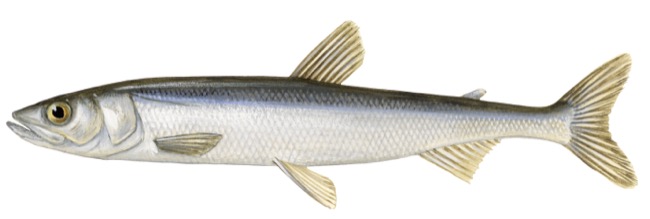
One such species is the European Smelt, Osmerus eperlanus. The European Smelt is an incredible species of fish that is now sadly extinct from many of our river systems. Often called the ‘Cucumber Smelt’ the fish smells incredibly strongly of cucumber and you can often tell when rivers are inhabited by European Smelt by the smell of cucumber emanating from them. This, rather cute looking, fish is relatively small at only about 20-30cm long when fully grown. It is a somewhat pretty fish, with large fins, bright silver scales a often stripes of darker colour running laterally along its dorsal surface. Like Salmon, the European Smelt spends most of its life at sea and only comes into rivers to breed, where it does so on shallow sand banks often many miles upstream. However, quite unlike Salmon the European Smelt does not travel great distances at sea but instead tends to stay local to its native river, often staying close to the river estuary and no more than a few miles along the coast. This is unfortunately the undoing of European Smelt because as various factors, such as pollution (they are very sensitive to water quality), have caused them to become locally extinct from river systems their limited range of travel makes it quite unlikely that a given river should be recolonised by nearby populations should the water quality improve.
osmerus_eperlanus
The European Smelt, Osmerus eperlanus .

This means that it is required that we must step in and re-introduce them from river systems where they have been lost. As female smelt produce around 40,000 eggs in a single spawning event (typically in the cold months of February to March) it might seem simple to take some of these, fertilize them and simply place them in to the rivers where they are missing. Unfortunately, it is not as easy as that as young Smelt are incredibly vulnerable and ideally, they need to be juveniles or sub-adults if they are to stand a chance of forming a viable population.

Recognising this, the European Union funded the SEAFARE project; a part of which was to tackle exactly this problem – how do you grow European Smelt successfully and in sufficient numbers to make a successful re-introduction program viable? I was employed to take on this research at Bangor University in 2011. So, after designing and building a specialist research aquarium that included various experimental tank setups and all the necessary filtration as well as facilities to grow all the necessary live-food for hungry young Smelt, myself and my colleagues set off to Galloway, Scotland, to collect some Smelt eggs on a cold and wintry day. To obtain Smelt eggs our collaborators at the Galloway Fisheries Trust had caught us some Smelt that had come up the river Cree to spawn. In their hatchery we strip-spawned (which involves gentle massage of the abdomen) male and female Smelt to obtain the necessary eggs and sperm. Smelt eggs are incredibly sticky, which enables them to stick to stones in the river and not be washed downstream by the current, and this presents a problem to us in our experiments so we had to wash them in a slight acid bath to remove their ‘stickiness’. When we returned them to Bangor, we made use of them in various experiments to figure out what the best temperature and salinity was for growing them. We established, for the first time ever, just how embryonic Smelt develop and how fast they grow as juveniles. We ascertained such things as when they transition to various food types and the suitability for different tanks. Would you expect, for example, that juvenile smelt fare best when in blacked out tanks? Clear glass tanks make Smelt fearful and they fight currents in keeping to the corners resulting in lost energy reserves; our answer was to use black plastic wrap to cover all of the tanks and thus make them nice and shady for our nervous baby Smelt.
OLYMPUS DIGITAL CAMERA
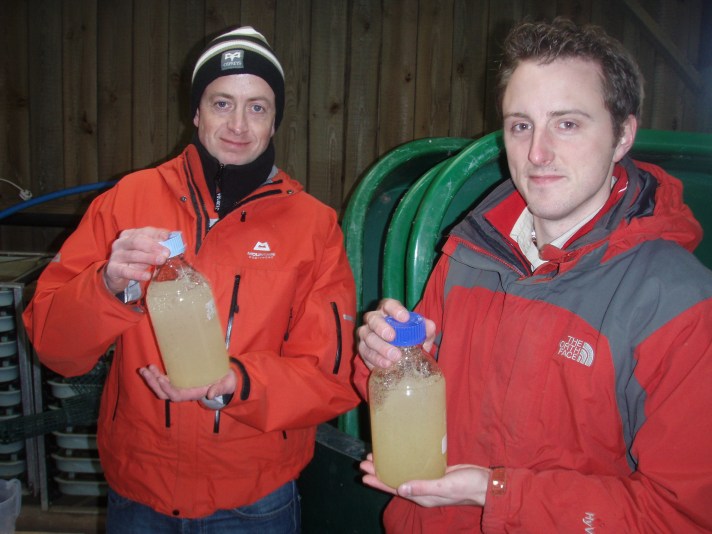
Dr Nick Jones and I using an acid bath to remove the adhesive surface of our recently fertilized Smelt eggs on a cold February morning in Scotland, 2011

The result of these experiments (and many months of intensive work!) is the recent publication below that details just how to grow Smelt in captivity for conservation purposes. My colleagues, Dr Nick Jones, Dr Ian McCarthy, Dr David Berlinsky and I hope that institutions can use our protocol to begin to reintroduce this amazing fish to places where it has been lost and our rivers can once again smell like cucumber!

Read the publication by clicking on this link below:

Determining the optimum temperature and salinity for larval culture, and describing a culture protocol for the conservation aquaculture for European smelt Osmerus eperlanus (L.)

I’d like to take this opportunity to thank all the people I worked with on this project but in particular the Principle Scientist and my line manager Dr Ian McCarthy. This was my first employment after graduating from my Master’s degree and it was a fantastic start to my research career.
Ligers, Zorses and Bottlenose Dolphins

Most people do not realise that there are numerous species of Bottlenose Dolphins; the exact number is a subject of strong debate and depending on the background of whom you ask will strongly influence the number they give. For example, a conservationist, a geneticist and a taxonomist are unlikely to agree on such matters. However, there are at least three species formally recognised by everybody, each with their own behavioural and physical characteristics. Of the three recognised species Tursiops truncatus, known as the Common Bottlenose Dolphin, is the species that most people are familiar with. This is owing to it’s near global distribution (it is found in every sea except those in the polar regions), its prevalence in popular culture – be it films or TV and of course its popularity in aquariums during the latter half of the 20th century. The second of the three species, Tursiops aduncus, is more often referred to as the Indo-Pacific Bottlenose Dolphin and as its name suggests is found in the Indian and Pacific Oceans only. Whereas T. truncatus is found in both coastal and offshore environments T. aduncus is principally only found in coastal waters. The third species, Tursiops australis, known as the Burrunan Dolphin is found only in coastal waters of parts of Australia.

One of the most controversial topics in in the field of biology is the subject of what defines a species. Certainly in most high schools, pupils are taught that animals belong to the same species if they can reproduce and form fertile offspring. This is undoubtedly complete fallacy and a recent topic of research that I have been involved in significantly proves this. This research, led by Dr. Tess Gridley of the University of Cape Town, has just been published and I provided the genetics elements included in the paper. The research focuses on the production of fertile hybrids by two species of Bottlenose Dolphin when kept together in captivity. Hybrids are the offspring of two different species – famous examples include the Liger (the offspring of a Lion and Tiger) and Zorse (yes you guessed it, the offspring of a Zebra and a Horse).

Hybrids
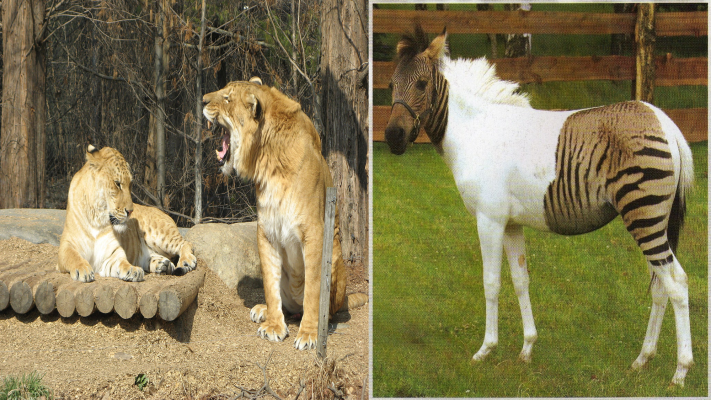
Hybrid animals are remarkably common. Here we see a Liger (Lion and Tiger hybrid) on the left and a Zorse (Zebra and Horse hybrid) on the right.

First of all, let’s deal with the elephant in the room. Yes, this research is based on dolphins kept in captivity. Let me be absolutely clear that I am in no way an advocate for keeping any species of cetacean in captivity. When the individual dolphins on which this research focusses were taken into captivity it was the 1970s, at which time our understanding of cetacean biology, in particular their emotional intelligence, was significantly inferior to our understanding today. Like all areas of knowledge, our understanding progresses through time and moral humans adapt their behaviour and actions to take account of this improved understanding. Flipping this on its head, we should be reticent to judge people who made decisions in the past with which we would normally condemn when judging by todays understanding, morality and societal will. Times and understanding were different then and as long as we are willing to, pragmatically and sensibly, adapt our actions today to take account of our improved understanding then we should look forward and not back. No, we should not be taking new cetaceans into captivity but those that currently are kept in aquaria, like those in this study, provide an opportunity to expand our knowledge of cetaceans such that we can continue to improve our decision making in the future; thus, having greater benefit for the conservation of wild cetaceans.

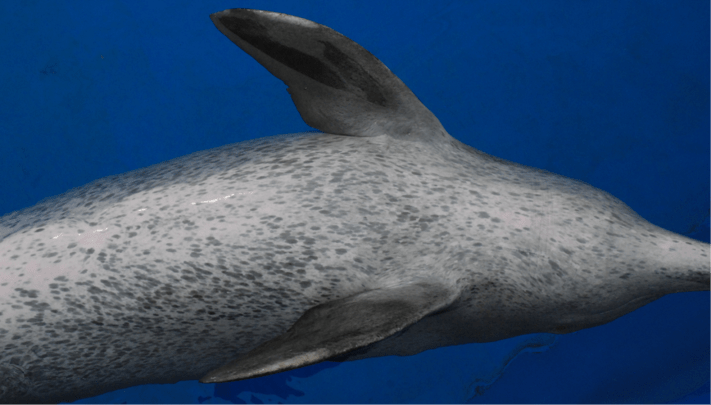
Our research focussed on two dolphins and their offspring. The first, a male Tursiops truncatus by the name of Gambit, and the second a female Tursiops aduncus by the name of Frodo. As well as physical characteristics (Frodo has speckling on her underside, a feature common in older Tursiops aduncus), we confirmed their species identity genetically. This is done using DNA extracted from blood taken from routine veterinary check-ups. The principal finding of this study revealed that hybrid and backcross offspring were fertile – proven by a second generation in both cases.

Backcross fertile
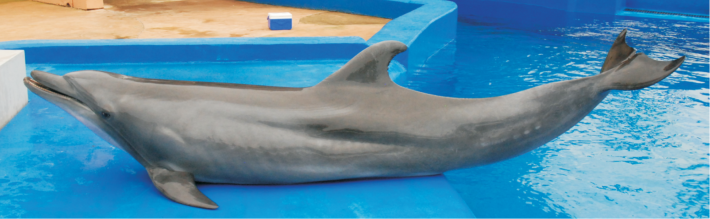
One of the apparently fertile backcross offspring featured in this research.
Picture1
The underside of Frodo, showing her belly speckling that is a common feature in mature Tursiops aduncus individuals.

This finding is important for two reasons. Firstly, it adds further weight to current scientific thoughts on evolution as a process. We like to think that evolution is a linear process and that once a new species is formed it is permanent until such time that it may go extinct due to some natural disaster or change in environment. We know, however, that this is not the case at all. There are a number of emerging examples that show species emerged in the past, likely as a result of physical separation, but then disappeared again when the physical barrier was removed because they simply merged and interbred with their parent species. A great example of this comes in the form of the Common Raven. We also know that reticulation, or the interbreeding of species during speciation is common and demonstrating the production of fertile hybrid offspring in this study provides a mechanism for this to happen.

Perhaps more importantly, however, this study demonstrates the potential resilience of Bottlenose Dolphins to adapt to changing environments. By producing fertile offspring, the success of gene flow events between different species of Bottlenose Dolphin may allow them to adapt to a more coastal or more pelagic way of life more readily should the need arise. We should take encouragement in this new understanding; although life in our oceans is currently under a great many threats it is likely that, thanks to the plasticity of evolution, the famous smile of a Bottlenose Dolphin will continue to greet us for many generations to come.


This research is published in PLoS ONE, Sepember 2018. You can download a copy of the paper here.

Full paper citation:

Gridley, T., Elwen, S.H., Harris, G., Moore, D.M., Hoelzel, A.R. and Lampen, F., 2018. Hybridization in bottlenose dolphins—A case study of Tursiops aduncus× T. truncatus hybrids and successful backcross hybridization events. PloS one, 13(9), p.e0201722.

Current research

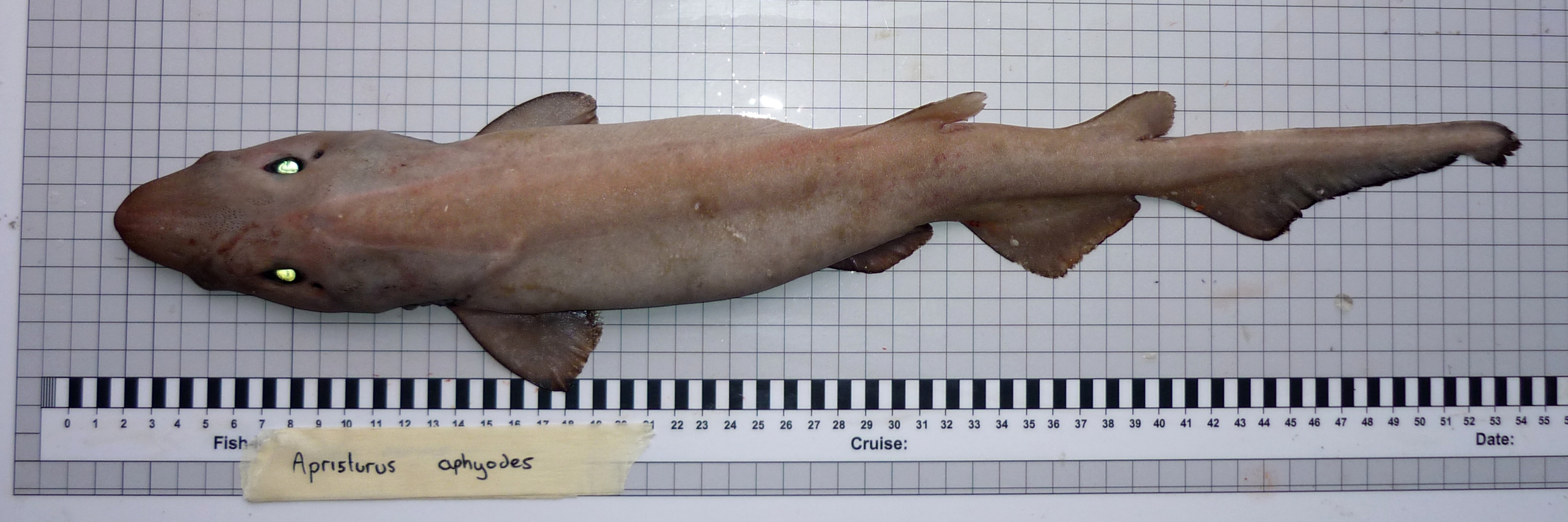
My current research is focussed on developing molecular markers for deep water sharks and is being conducted at Edge Hill University with fellow early career researchers David Goodson, Thom Dallimore and Carl Barker. Deep water sharks are poorly understood relative to their shallow water counterparts but are often even more vulnerable to anthropogenic pressures. Deep water fishing fleets are increasing in size every year and it is well known that many deep water sharks aggregate in single sex or age cohort groups meaning a single trawl can have a very significant impact to localised populations. It is vital that we understand more about these deep water species in order to effectively manage conservation efforts. Key to this understanding is knowledge on population structure and connectivity. The vital first step on this road is the development of molecular markers to enable comparisons.

scotia

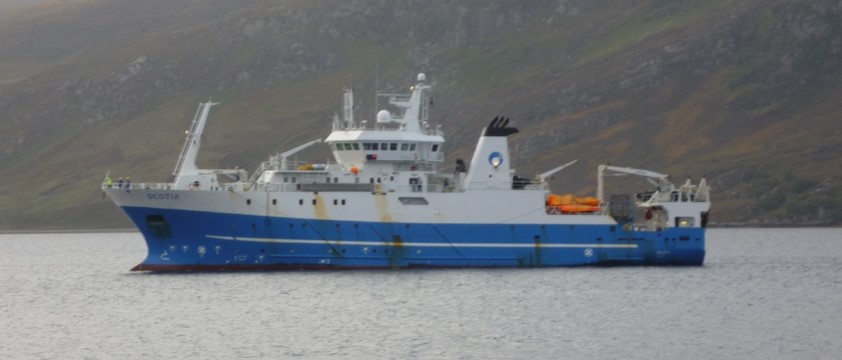
The shark samples I am working on all come from the Rockall Trough, an area of deep water off the coast of Scotland, and were collected whilst on board the FRV Scotia during a Marine Scotland deep water survey. I am principally targeting the sharks Galeus melastomus and a selection of sharks from the genus Apristurus, including some additional samples very kindly supplied by Dr Ana Verissimo of CIBIO – University of Porto. I am also attempting to replicate the excellent work completed by Helyar et al (2011) who developed microsatellite markers in Centroselachus crepidater. Whilst initial thoughts were to jump straight to population examination through the use of Amplified Fragment Length Polymorphisms (AFLPs) we were encouraged to attempt to develop microsatellite markers by Dr Jim Provan (Queens University Belfast) whilst presenting a poster at the BES Ecological Genetics Group 59th Annual Conference. With his guidance that is exactly what myself, fellow Technician David Goodson and PhD students Carl Barker and Thom Dallimore are now attempting. Please follow me on Twitter for updates and other exciting Marine Vertebrate news.

P1000119

Helyar, S., Coscia, I., Sala-Bozano, M., & Mariani, S. (2011). New microsatellite loci for the longnose velvet dogfish Centroselachus crepidater (Squaliformes: Somniosidae) and other deep sea sharks. Conservation Genetics Resources, 3(1), 173-176.

logos